 Back
Back Why use video for internal communications?
Marketing tips
Pigeon Studio
26.01.2023
9 minutes


In recent years, we've seen a rapid increase in the popularity of video content. In no small part due to the rise of social media platforms that promote short and captivating videos over the written word. As a society, we've grown accustomed to the speed and convenience of receiving information this way. And brands are using this fact every day in their marketing strategies to create even more effective and compelling advertising.
But today, we'd like to take a look at another way you can use videos to grow your business. Not by promoting your products and services to potential customers, but rather by improving internal communications to create a more productive workplace and increase employee engagement.
Why the shift? The data is clear. Studies consistently show that employees are far more likely to engage with video content than text. While reading a policy document might yield a retention rate of around 10%, watching a video can boost that retention to nearly 95%. When you add animation to the mix, comprehension speeds up even further because you are visualizing abstract ideas rather than just describing them.
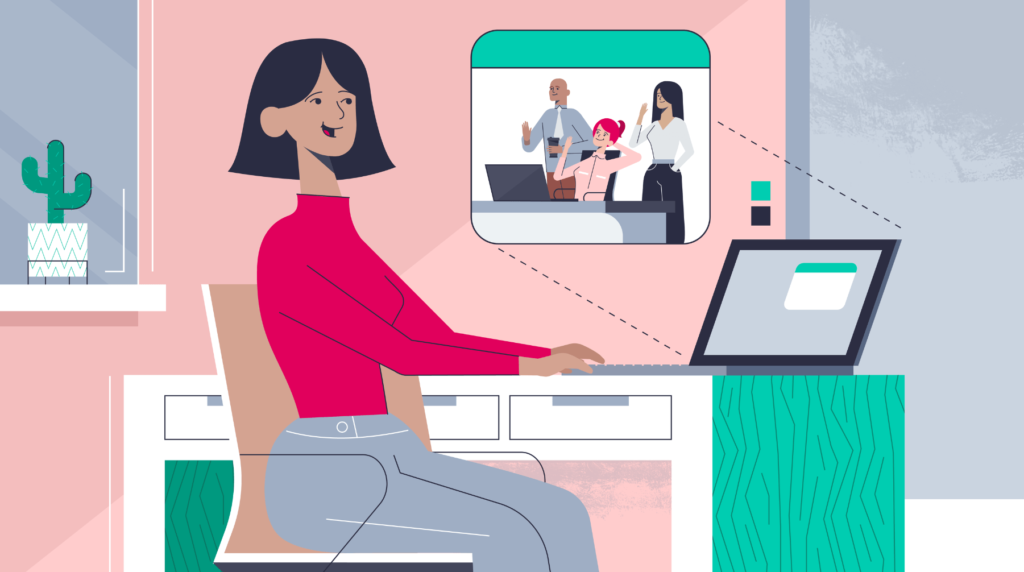
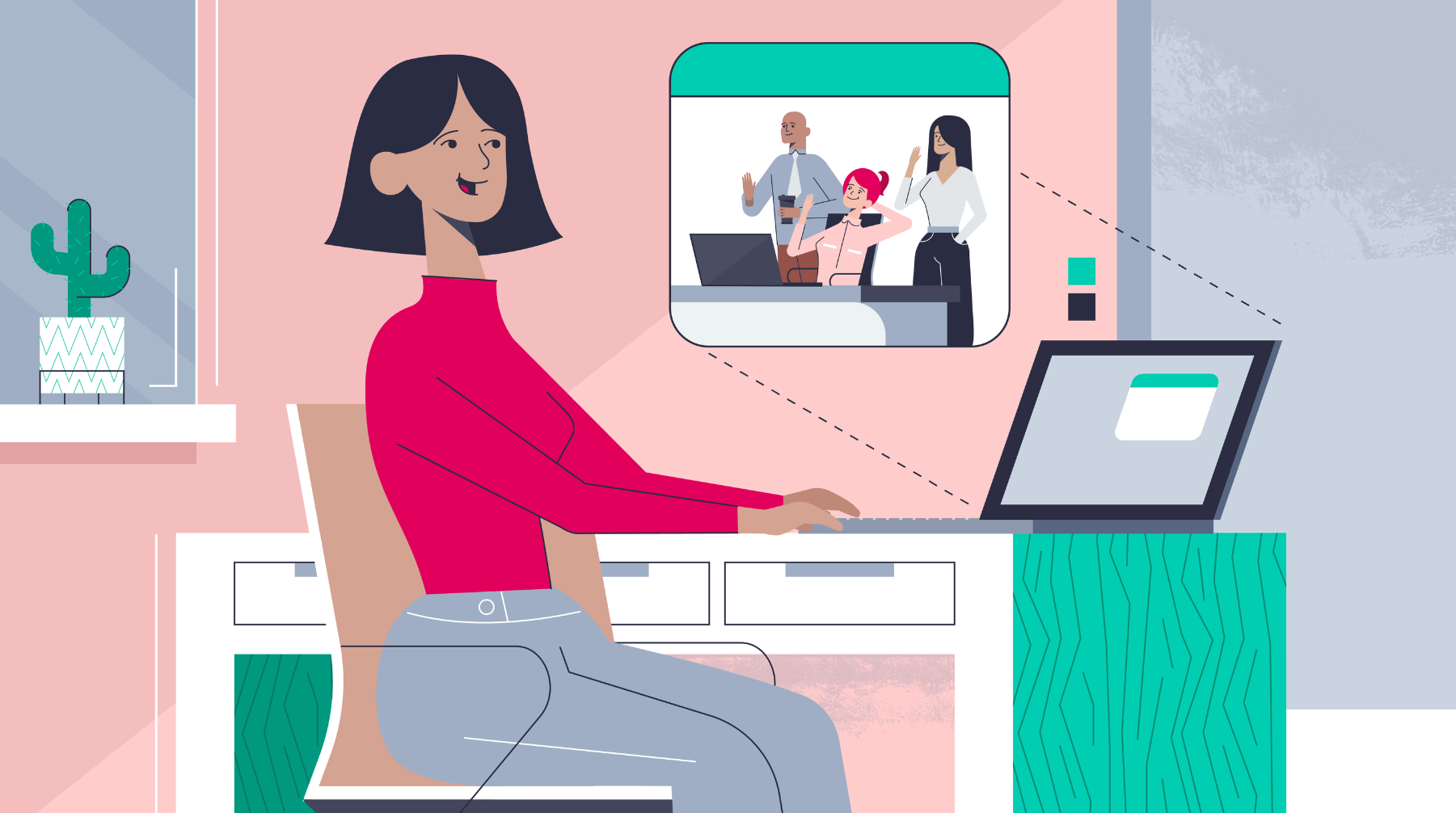
What Are Internal Communication Videos?
An internal communication video is a video created to pass information within a company. You can use it to induct new employees into their work responsibilities, announce important changes, or introduce the company's goals for the future.
It's a powerful medium that can do much more than just inform or train employees! A well-made and captivating video can improve employee satisfaction and loyalty and, in effect, make them more motivated and productive. These aren't one-size-fits-all clips. Internal communication videos exist across a spectrum of formats. They range from simple updates to high-end internal communication animation designed to explain complex global strategies.
There are many great internal video ideas to use, for example:
- A video featuring one employee's success story can demonstrate to others the potential for career development at your company. Showing your team that their hard work and commitment can lead to new opportunities is one of the more effective ways to motivate new and existing employees.
With a good internal communications strategy, you can significantly improve employee engagement and boost productivity!
What Is the Role of Video Content in Internal Communications?
When it comes to internal communications, many companies tend to rely on meetings and emails. But both options come with significant drawbacks. In-person meetings take valuable time, not to mention that it's often difficult to find a suitable date and place for everyone involved. And while emails can be sent to many recipients at once and are great for quick day-to-day communication, they aren't the best option for long and complex messages. Why? Because many people find it difficult to focus on the written word, which makes absorbing information from text difficult.
Videos, on the other hand, solve all of the issues mentioned above! They are much more engaging, attention-grabbing, and compelling. Even a short video can contain a lot of information and present it in a much easier-to-understand way than text ever could. Most importantly, videos enable asynchronous communication. In a hybrid or remote work environment, not everyone needs to be online at the same time to explain a new concept. Employees can consume internal communications on their own schedule, pausing and rewinding as needed. Furthermore, video allows for better accessibility. Through captions and transcriptions, you can ensure that your message is clearly received by everyone, regardless of their hearing ability or language proficiency.

What Can Internal Communication Videos Be Used For?
With our animated videos, you can convey any type of message and improve employee communications. Animation can be used to bring all kinds of internal corporate video ideas to the screen, from explainer videos to internal videos with important news and updates, tailored to the channels your company uses.
The most common internal communications video examples include:
Company Culture Videos
Creating a company culture video enables you to show what your company is truly about. It can showcase values that are at the core of your business, highlight the importance of each team, talk about what benefits you offer, and what makes working for your company unique. It is a powerful tool for recruitment. Such videos are a great way to allow potential candidates or new hires an insight into the company culture of their new workplace, as well as to make your existing employees feel noticed and valued. It’s about showing, not just telling, your company values.
Onboarding Videos
An onboarding video, also known as an orientation video, can help new employees get familiar with your company, its values, what each team or department is responsible for, and HR policies and practices. It's a valuable part of the onboarding process that makes answering common questions and providing important information quick and easy. For new hires, seeing a visual map of the office or an animated flowchart of who does what is far less overwhelming than a 50-page handbook.
Project Recap Videos
Even when different teams work together, it's often difficult for employees to fully understand what kind of work each team is contributing and how their own efforts factor into the outcome. With a recap or summary video, it's easy to explain different aspects of such shared projects and the work that went into completing them to show that each person who took part in the project is responsible for its success.
Announcement Videos
A business announcement video is a great way to inform your employees of significant changes, upcoming events, big projects, and any other news you want to share. But why is a video announcement better for effective internal communication than, e.g., an email? Keep in mind that your employees exchange countless messages with their team members and managers every single day, and a plain-looking email can easily be overlooked. An eye-catching and engaging animated internal video can not only convey and explain your key messages much better but also make them more memorable.
Explainer Videos
Every time you implement a new tool, introduce a new product, or make any changes to the company's structure or management practices, providing your employees with reliable and detailed information is crucial if you want to keep high productivity levels and avoid unnecessary confusion and stress. And there's no better way to deliver in-depth explanations than with explainer videos! You can use animated video content to talk about any topic in an engaging way, specifically when you need to break down complex information.
Appreciation Videos
Even the best business idea has no chance of success without a team of skilled workers capable of bringing it to life. Your employees are at the heart of your company's success, and you can use an internal communications video to acknowledge their input and hard work. It's a simple yet effective tool internal communicators can use to create a good atmosphere, increase job satisfaction and boost engagement.
Training Videos
Training videos are a great way for your more experienced employees to pass on their knowledge and expertise to new team members without having to organize in-person training every time you hire someone new. While such videos cannot explain everything and completely replace traditional training, they can speed up the entire process by covering basic information about work responsibilities, as well as different processes and tools.
Here you can watch the example of the training video for Fortum. The animation explains the safety rules in force at the facility.
Crisis Communication Videos
When an emergency strikes—whether it's a cybersecurity breach or a safety incident—speed is everything. Crisis communication videos allow for rapid dissemination of urgent information. Unlike a frantic email chain, a video ensures the tone is controlled and the safety protocols are visually demonstrated, minimizing panic and ensuring compliance.
Change Management Videos
Organizational change often brings resistance. Change management videos are distinct from general announcements. They are designed to guide teams through transitions step-by-step. Whether you are merging departments or shifting to new software, these videos can feature leadership messages that explain the "why" behind the change and the "how" it will be implemented. This transparency helps address concerns preemptively and supports employees through the transition curve.
6 Benefits of Using Video for Internal Communications
- Internal communications videos are much more engaging than emails.
Even the most dedicated employees can quickly lose focus when reading a long text, especially if it contains complicated or technical information. This might not seem like a big issue at first, but unfortunately, it leads to problems with retaining written information. That's why using videos in internal communications is much more effective. Even a short video can be packed with valuable content, but it's much more engaging than text. The combination of sound and motion can make any message easier to understand and remember. - Videos are a great alternative to in-person meetings.
Imagine you have an important announcement that you want all your employees to hear. Whether you want to talk about an upcoming company event or a new client, announce changes within the company, or introduce new employees, there's really no reason for you and your entire team to gather in one place. Using an internal video instead is just as effective but saves a lot of time and helps you avoid scheduling conflicts. Plus, with a video for internal communications, your message can reach everyone, including remote teams. - Videos give your employees easy access to information at any time.
One of the best things about sending a video instead of organizing a meeting is the simple fact that such a video can be re-watched as many times as necessary. It is especially important for onboarding videos and training. Sometimes, hearing about something once is not enough to truly understand it, especially when you get a lot of new information at once. With videos, you give your employees a chance to revisit a specific topic whenever necessary and learn at their own pace. - Internal communications videos make remote employees feel included.
Remote working offers many new opportunities, but it's not without its challenges. For example, one of the biggest perks of being physically present in the office is being able to connect and build good working relationships with colleagues. Employees who work remotely, on the other hand, often find this difficult. It's easy to start feeling disconnected from the company you work for and your team when you only communicate through emails. Creating project summary videos or company culture videos is a simple solution to make your remote employees feel more included. - Video content is easier to understand.
In most cases, it's easier to understand something when you see how it's done instead of just reading about it. This is exactly what makes videos so effective in explaining abstract concepts, technical processes, or innovative technologies. They enable you to convey the same information that a written text would provide but with a visual aid to make the message clearer. And the results can be even better if you turn to tools such as engaging storytelling and animation. With an animated video, it's possible to show complex ideas in a simplified manner, and by turning them into stories, it's often much easier to explain how they work and what benefits they offer. - Video is accessible and inclusive.
A diverse workforce has diverse learning styles. Some people are visual learners, while others prefer audio. Video caters to both. Furthermore, internal communication videos can easily be adapted with subtitles, translations, and audio descriptions. This ensures that all employees, regardless of their native language or hearing ability, have equal access to information. This makes internal communication a truly inclusive tool.

Is This the Right Time to Add Video Content to Your Company's Internal Communications Strategy?
Every business needs effective communications that allow information to flow freely between different levels of the company. And the bigger your company, the more time and effort it takes for your internal communicators to organize meetings and calls to make sure that everyone is up to date with internal business affairs and has access to the knowledge necessary to handle everyday operations.
Using video communication can significantly cut down the time it takes for your message to spread among all employees. And as video, and animation especially, is much more effective than text in conveying information, an internal video can be a great alternative not only to in-person meetings but even emails! This means higher productivity and better communication.
But what about the cost? We often hear concerns about budget, but consider the ROI. Internal communication animation is scalable. Once created, a safety training video can be used for years, saving hundreds of hours of management time. Professional video production services are now more accessible and affordable than ever before.
We recommend a phased implementation approach. You don't need to overhaul your entire strategy overnight. Start with one high-impact category, such as onboarding videos, and measure the results. An animation studio, such as Pigeon Studio, can work with you to find ways to bring your internal communications video ideas to the screen within your budget.
How to Create Effective Internal Communications Videos?
- Plan your message. This might seem like the most obvious advice, but it's nonetheless worth repeating. The very first step when creating any type of internal communications videos should always be to decide what exactly you want to say with it. Internal communications videos should provide clear and reliable information without any room for misunderstandings. It may also be a good idea to involve your employees in the process and ask them for video ideas. This will help you find issues and questions worth answering. For example, if you ask your recruitment team what kinds of questions are common among new hires, you will get a clear picture of what your onboarding video should address.
- Choose the right method to get your message across. When you know what you want to say, think about how to say it to message effectively. A simple story about a typical day at your company can say a lot about the company culture, but if you want to answer common questions, using a Q&A format may be a more suitable option. Picking the right type of video for your message can help you make it more engaging, memorable, and effective.
- Tailor your video content to the audience. When planning your video, ask yourself: Who is going to watch the video, and what is its purpose? It's important because the language and tone you use can affect how your message is received. For example, it might be a great idea to make a company culture video that is fun and uplifting, but if you want to summarise a project or talk about financial results, a more serious and businesslike tone might work better.
How to Distribute Internal Communication Videos?
You've created a powerful tool for communication, but it's useless if no one sees it. Distribution is just as critical as production, requiring a strategic mix of channels to ensure every employee has easy access to the information they need. To truly maximize engagement, you must meet your team where they already work, matching the platform to the specific type of content you are sharing. Here are the most effective ways to deliver your videos across the organization:
- Digital Bulletin Boards: Perfect for centralized announcements in shared physical spaces.
- Learning Management Systems (LMS): The ideal home for training and onboarding videos where you need to track completion rates.
- Intranet/Internal Portals: Embed videos directly into your company news feed to keep engagement high.
- Email Integration: Instead of a long text, send a teaser text with a link to the video.
- Social Media (Internal): Platforms like Slack, Microsoft Teams, or Workplace by Meta are perfect for sharing lighter content or success stories.
- Video Libraries: Create an organized, searchable repository for recurring reference material like "How-To" guides or explainer videos.
Why Should You Consider Animated Internal Communication Videos?
Now that you know why using videos in internal communications is beneficial for your company and how to create such content, there's one more important thing to consider: Do you want live-action videos or animated ones? Nowadays, many companies tend to rely on animation both in their marketing strategies and internal communications. Why? Because animation offers many benefits that a traditional video doesn't. For example, there's no need to choose the right location or hire actors to produce an internal communication animation. And issues such as bad lighting or the risk of disturbing your employees are not a problem either.
But what makes animation truly stand out is the fact that it gives you more creative freedom. Animated videos can visualize the invisible, showing inside a machine, visualizing data flows, or depicting future scenarios that don't exist yet. It also makes it easy to include elements of your brand identity, such as colors or a brand hero. This is an easy way to make your content more consistent and easily recognizable. Animated videos are unique and, therefore, more engaging, captivating, and memorable.
Internal Communication Animation Formats and Styles
Choosing the right visual approach is just as important as the script itself, as different messages require distinct artistic treatments to land effectively. To help you select the best fit for your specific objectives, here are the most effective animation formats:
- Whiteboard Animation: A classic, hand-drawn style. It is incredible for explainer videos that are heavy on facts or educational content. The "drawing" process keeps the brain engaged and anticipating the next step.
- 2D/3D Animation: Full animation offers the ultimate flexibility. It creates a polished, consistent brand world. It is ideal for company culture pieces or for establishing a strong emotional connection.
- Motion Graphics: Best for data visualization. If you have quarterly results or statistics to share, motion graphics turn boring spreadsheets into dynamic narratives.
- Hybrid Videos: Sometimes you need a human face and visual clarity. Hybrid videos combine live-action footage of leadership or employees with animated content overlays to highlight key points.
- Screen Recording Videos: Essential for software training. Capture the interface, but enhance it with zoom-ins and highlights so the user knows exactly where to click.
Work With an Animation Studio to Take Your Internal Communications Videos to the Next Level!
Working with a professional animation studio is the best way to create effective and high-quality animated internal videos. At Pigeon Studio, we have years of experience creating animations for businesses. We understand that each company is different. We don't just send you a template. We partner with you to understand your specific communication bottlenecks. Whether you need to boost employee engagement or simplify a complex compliance update, we approach every single project individually. We give it our full attention to turn your video ideas into something that will not only meet but exceed your expectations!
Ready to transform your internal comms? Let's talk.
Through motion, we translate brands, products, and ideas into captivating and impactful content.

Enter your email address: